How Eden Helps
Not a catalog of capabilities.
A disciplined way of working with organizations.
We begin with where the organization is - and what leadership needs to run more clearly as it grows.
What the work usually reveals
What the work usually reveals
-
01
Leaders often request technology when the unresolved problem is decision rights.
-
02
Programs stall less from missing tools than from unclear ownership of the operating change.
-
03
Improvement holds when the people who run the business can defend the system under pressure.
How Eden works
Understand. Design. Improve.
Each step is a response to a real operating challenge - not a catalog of services.
-
01 · Understand
Challenge
Leaders feel pressure to buy tools before the operating problem is named.
Approach
Surface goals, constraints, friction, ownership, and risk before any system is selected.
Outcome
A shared picture of what is actually stuck - and what decision must be made next.
-
02 · Design
Challenge
Work, technology, and decision rights evolve as separate conversations.
Approach
Align decisions, ownership, and systems so the organization can actually operate.
Outcome
A design leadership can defend under pressure - not a vendor shortlist alone.
-
03 · Improve
Challenge
Programs stall after launch when ownership of the change remains unclear.
Approach
Support adoption and evolution so improvement endures as the business changes.
Outcome
People who run the business can own and defend the system without the advisor in the room.
Decision architecture
Why method is architecture, not slogans
Most decisions fail before they are made: weak structure around pressure, governance, and information.
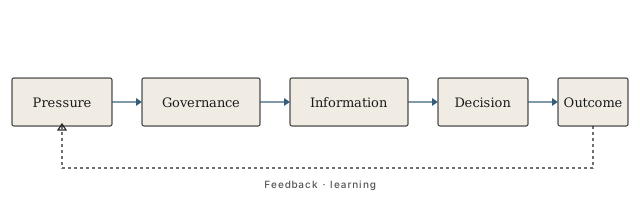
Where leaders typically ask for help